Tag: Artificial intelligence

Beyond the Voicebot: Why AI Voice Agents Change Everything

Beyond the Voicebot: Why AI Voice Agents Change Everything

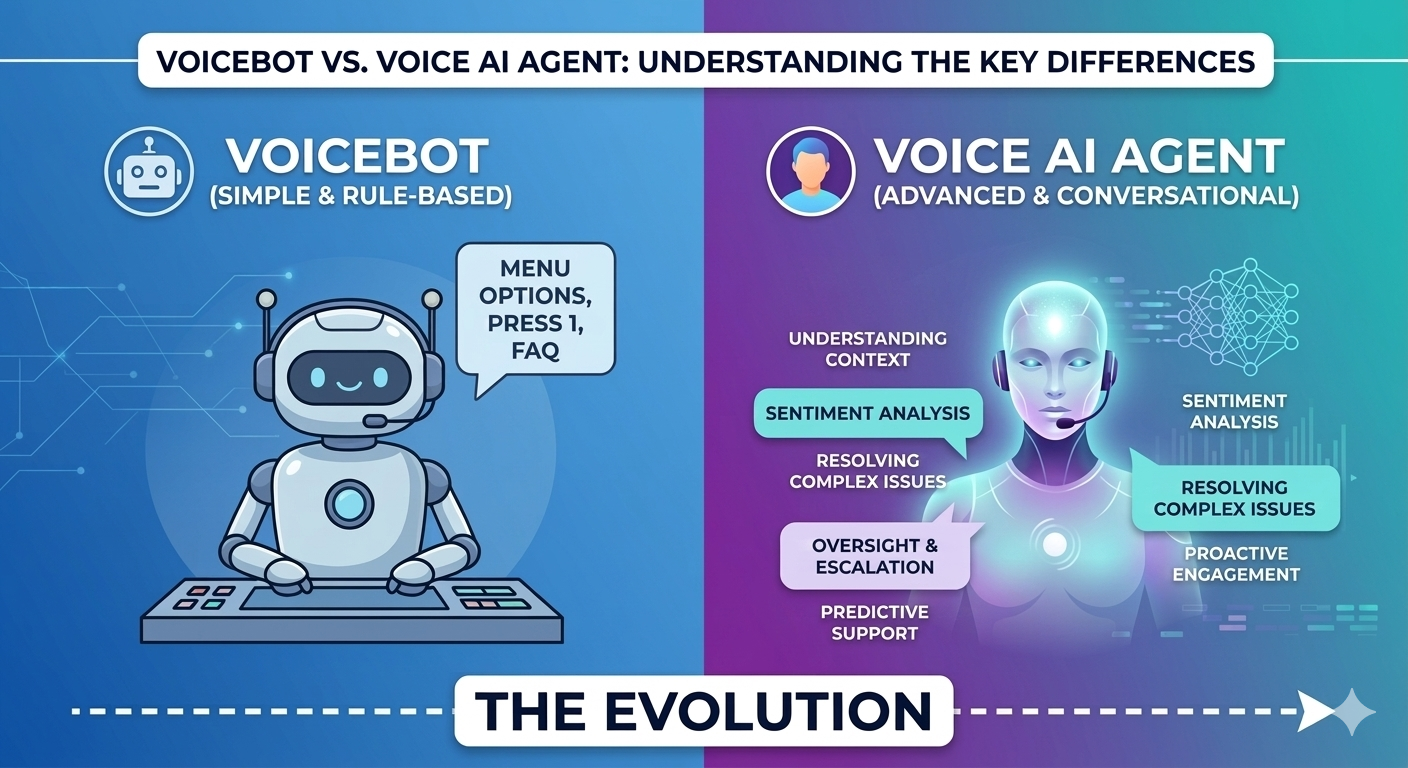
AI voice technology has split into two very different generations. On one side are voicebots, the static, rule-based systems most callers know all too well. On the other side are AI Voice Agents, intelligent, adaptive systems capable of understanding context, reasoning, and taking real actions across business systems.

This isn’t an incremental upgrade. It’s a complete rethink of what automated voice can actually do.

Voicebots vs Voice AI Agents, let’s take a look

Voicebots: Useful, but Limited.

Voicebots weren’t badly designed, they were designed for a simpler era, when customers didn’t expect as much as they do now. They follow predefined scripts and decision trees, and for predictable, routine tasks, they do the job. Answering FAQs, routing calls, and capturing basic information.

The problem is what happens when a conversation goes off-script. A caller who interrupts, asks something unexpected, or needs two things at once. A voicebot can’t adapt, can’t think beyond its boundaries, and can’t take any meaningful action. That’s when the frustration kicks in, and why so many people still dread calling automated systems.

AI Voice Agents: A Whole Different Conversation

AI Voice Agents are technically still “bots” but what’s behind them is entirely different. They’re built on large language models with access to vast, structured knowledge bases, which means they can genuinely understand what someone is asking rather than just matching keywords to scripts.

They can hold a proper back-and-forth conversation, ask follow-up questions, interpret complex requests, and actually do something about them, updating records, processing claims, sending documents, all mid-call. They can even translate languages in real time, so a caller who isn’t comfortable in English can still get the same quality of help.

It’s the difference between a machine that answers and a system that actually resolves. A solution that wins for both the caller and the business themselves.

CRM, invoice, AI and new website icons

Recent industry research reinforces how rapidly voice automation is evolving:

AI is accelerating across customer service at a pace that would have seemed unrealistic just a few years ago.

Salesforce’s 7th State of Service report shows that AI is expected to handle half of all customer service cases by 2027, up from around 30% today, based on a global survey of 6,500 service professionals. Nearly four out of five service leaders now say investment in AI agents is essential to meeting business demands.

Businesses are not adopting this technology because it is fashionable. They are adopting it because it delivers beyond basic scripted automation toward intelligent, context-aware systems capable of managing complex, multi-step interactions at scale.

The reason is not cost alone. It is a capability.

Traditional voicebots were designed to automate the predictable. AI Voice Agents are built to manage the unpredictable and that is where modern customer service is won or lost.

Businesses that make the shift benefit from higher first-call resolution, genuine 24/7 intelligent coverage, reduced pressure on human teams, and the ability to automate complete customer journeys rather than isolated tasks. Just as importantly, human agents are freed to focus on the conversations that truly require empathy, judgement, and reassurance the moments where a real person makes the greatest impact.

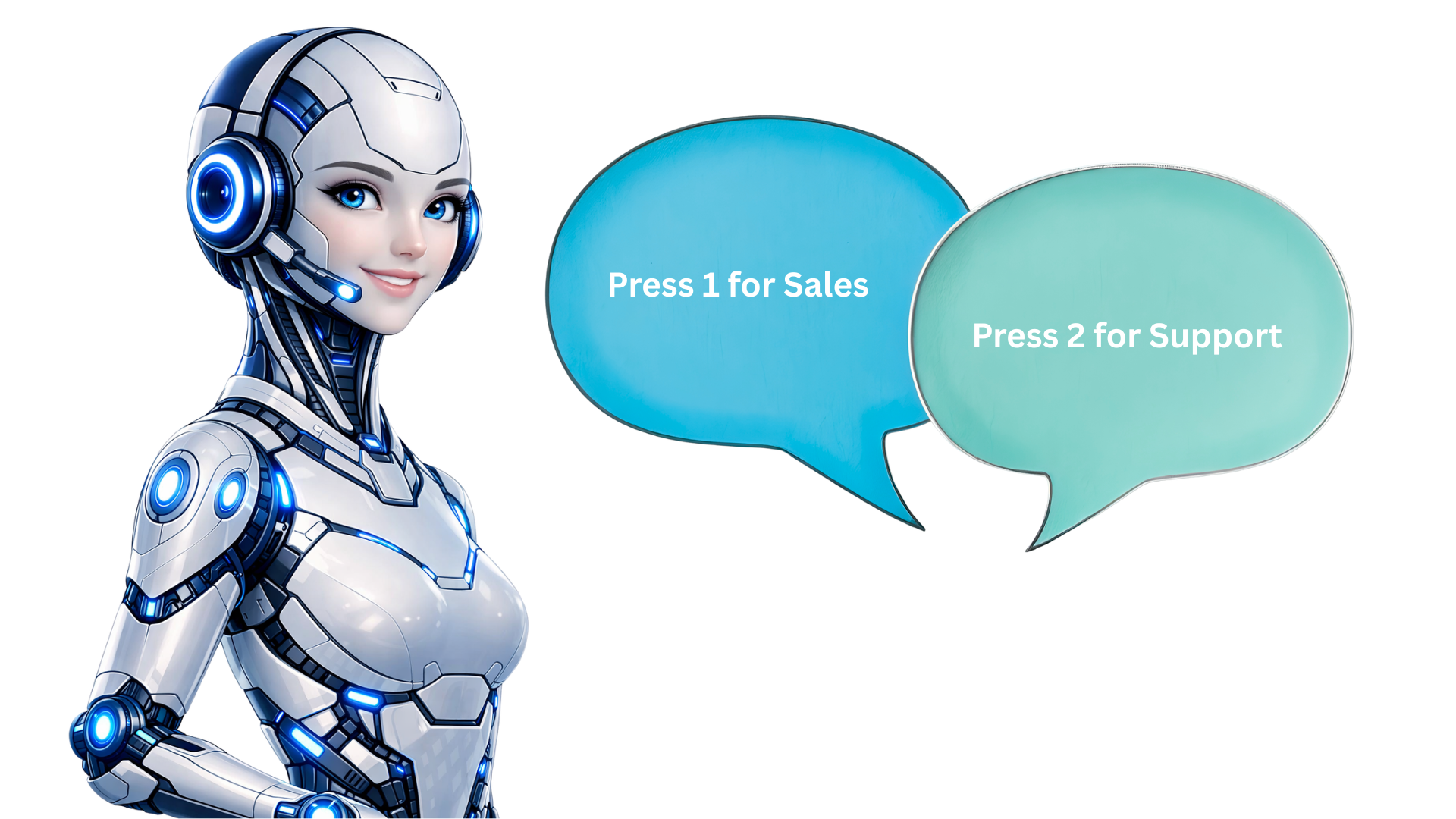
AI Voicebot

A white and black robot with two speech bubbles saying press 1 for sales and press 2 for support to show voicebot capabilities

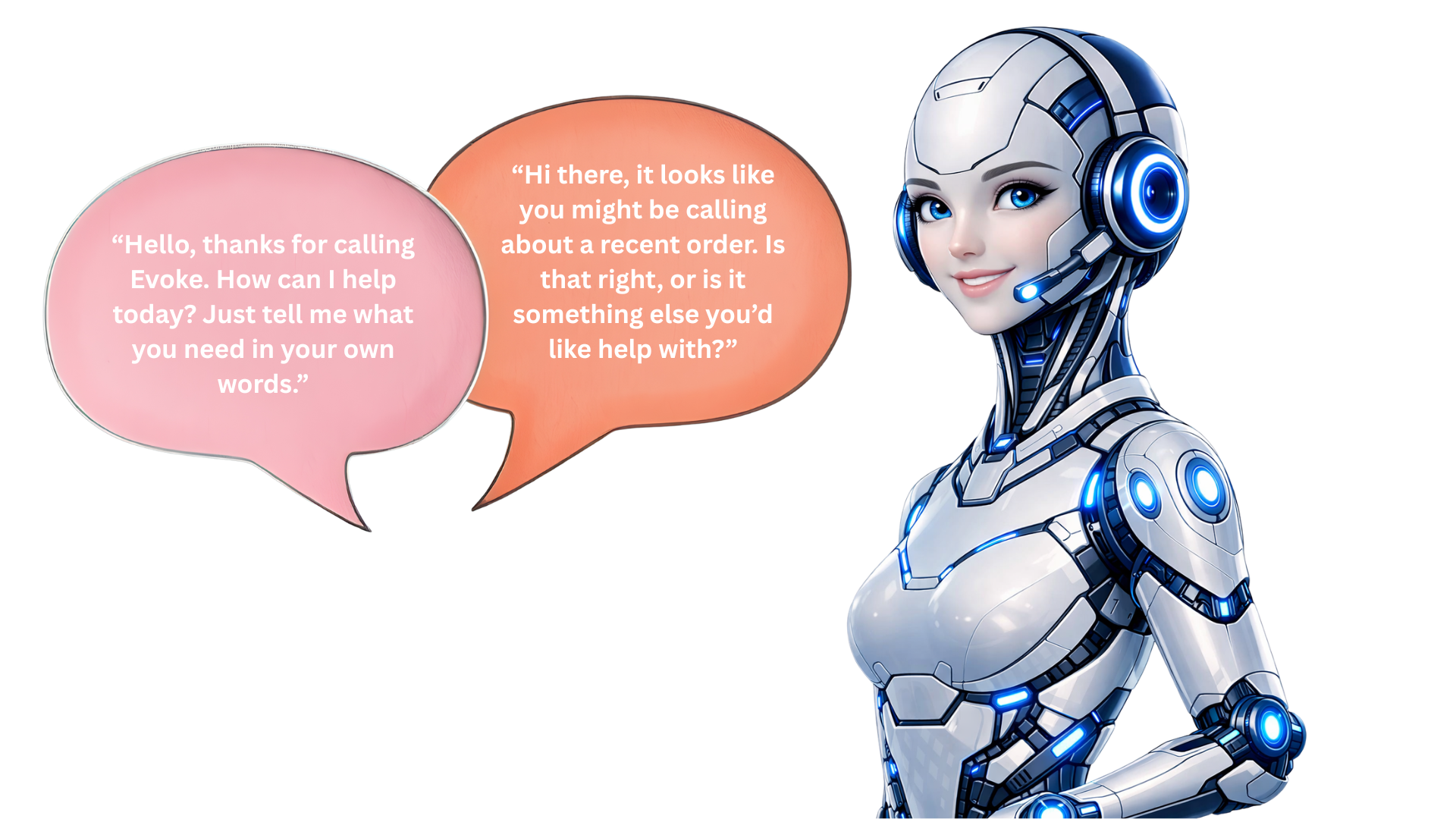
AI Voice Agent

A white and black robot with a pink and coral speech bubble to show AI Voice Agent

What a Voice vs AI Voice Agent Looks Like in the Real World:

Picture calling about a travel insurance policy and asking: “Does my cover include delays caused by airline strikes and can you email me the documentation?”

A voicebot can’t handle that. It’s two things at once, requires policy interpretation, and needs to trigger a follow-up action. An AI Voice Agent can do all of it within the same call, check your policy, interpret the relevant clause, give you a personalised answer, send the documentation, and log the interaction automatically.

Or imagine calling your motor insurer at 2am after a minor accident. An AI Voice Agent doesn’t clock off at 5pm. It can start your claim, arrange recovery, walk you through the next steps, and keep the line open for as long as you need, in whatever language!

What Customers Actually Want

Customers aren’t anti-automation. They’re anti-frustration. They want to feel understood, get their issue resolved without repeating themselves, and speak naturally rather than navigating endless menus.
AI Voice Agents deliver that. Voicebots, at their worst, deliver the opposite.

The Bottom Line: Voicebots follow scripts. AI Voice Agents understand context. One answers; the other resolves.

That difference isn’t about technology, it’s about how your customer feels when they hang up. Our goal is to ensure they feel helped, not frustrated. Whether you prefer an all-in-one system or a more flexible setup, we offer both paths so you aren’t locked into a single way of working.

Want to meet our friendly AI assistant or just chat about what’s possible? Get in touch today.

Chat with us

Continue reading

AI in Business Telephony: Why Voice Communication is About to Get Really Interesting

AI in Business Telephony: Why Voice Communication is About to Get Really Interesting

Phone calls are now more valuable, and here’s why…

Remember when everyone said email would kill the phone call? Then messaging and online chat would finish the job? Well, here’s a plot twist: artificial intelligence isn’t putting the final nail in the coffin of business telephony. It’s actually making phone calls more valuable than they’ve been in decades.

Looking back, traditional phone systems were pretty basic. They recorded calls, stored them somewhere, and that was about it. Maybe someone would listen back if there was a complaint. Most of the time, those recordings just sat gathering digital dust.
AI changes everything. Suddenly, every conversation becomes useful, and easily accessible.

Call Summaries That Actually Save Time

Gone are the days of sales teams typing up call notes. It’s tedious, and let’s face it, things can easily get missed. When you stare up at that wallboard looking at your call stats, everyone’s rushing to get to the next call.

So we welcome AI call summaries that handle this automatically. Every call gets a clear, readable summary of what was discussed, what was agreed, and what needs to happen next. Your team can actually focus on having good conversations, building relationships instead of frantically scribbling notes. This is important for several reasons, but from a budget perspective, it’s cheaper to retain a customer than it is to do the legwork to get a new one!

The best part? Nothing gets forgotten. That product feature the customer mentioned in passing? Captured. The delivery date they’re worried about? Noted. The competitor they’re also talking to? Right there in the summary.

Futuristic digital graphic of a human brain made of glowing blue circuit board patterns

Photo credit: Geralt

Sentiment Analysis: Actually Understanding How People Feel

Here’s something we all know but often ignore: what people say and how they feel aren’t always the same thing. A customer might say “it’s fine” while their tone screams “I’m about to switch providers.”

AI sentiment analysis picks up on these signals. Emotion detection picks out frustration early enough to do something about it. It spots enthusiasm that could mean an upsell opportunity. It flags calls where someone’s genuinely upset and needs senior attention.

This matters more than you might think. Patterns emerge over time. You’ll see which products cause problems, which team members are brilliant at calming angry customers, even which times of day people are most stressed. That’s the kind of insight you can actually use to improve things.

Follow-Ups That Happen Without Chasing

We all know follow-up matters. We also all know it’s the first thing that gets dropped when people are busy.
AI-powered systems can trigger follow-ups automatically based on what was discussed. Customer asked about a feature? They get relevant information sent over within minutes. Support issue needs escalating? The right person gets notified with all the context they need.

This isn’t about replacing the human touch, it’s about making sure nothing slips through the cracks when you’re juggling fifty things at once.

Smarter Call Routing in Contact Centres

Traditional call routing is basically “who’s been waiting the longest?” which is fair, but not exactly smart.

AI routing looks at who’s calling, why they’re calling, their history, and even how they’re feeling, then connects them with the best person to help. Not just anyone who’s available, the right person.

Your VIP customers get experienced agents. Technical questions go to technical people. Someone who’s clearly frustrated gets connected with your best problem-solvers. First-call resolution goes up, customer satisfaction improves, and your team feels more effective.

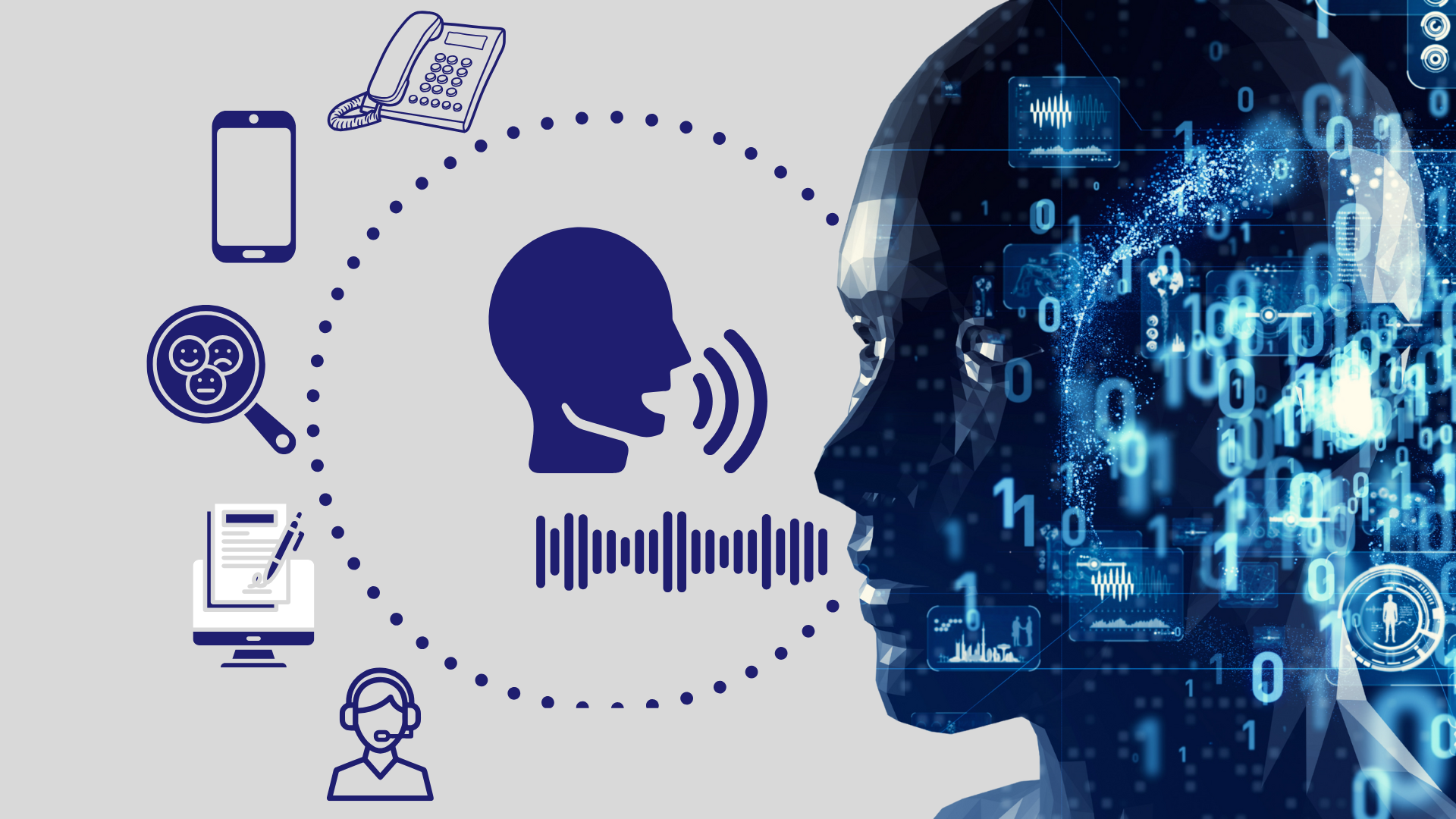
AI head with dark blue icons mobile, telephone, sentiment rating, call summaries, person talking, audio lines and contact centre.

Enter Agentic AI: Your Always-On Team Member

Now, here’s where things get really interesting. While AI is making human agents more effective, there’s another development changing the game: agentic AI that can handle calls independently.

When we launched Evoke Telecom’s Agentic AI, Ellie became our team member who never sleeps, never has a bad day, and can handle multiple conversations simultaneously. It’s not a chatbot reading from a script, it’s AI that can understand context, solve problems, and know when to bring in a human.

You can have an Ellie too, this means your customers get instant answers at any time. Simple queries get resolved immediately. Your human team focuses on the complex, relationship-building conversations that actually need a person. And every interaction, whether handled by AI or humans, generates the same rich data and insights.
The combination is powerful: AI handling routine calls efficiently while your team tackles the interesting stuff, all feeding into the same analytics and improvement cycle.

Performance Improvement Through Real Data 

Once you’ve got transcribed calls, you can actually search them. Need to find every conversation mentioning a specific competitor? Done in seconds. Want to see how your team handles price objections? You can pull up every example and identify what works.

Coaching becomes specific rather than generic. Quality assurance becomes comprehensive rather than random sampling. Training addresses actual gaps instead of assumed ones.

So Is Voice Communication Dead?
Not even close. Actually, AI is proving that voice is still the best way to communicate about anything complex, important and to keep those invaluable relationships going.

The logic is simple: Voice → Recording → Transcription → Powerful Insights

Every phone call becomes valuable data. But, and this matters, the quality of your recording affects the quality of your insights.

Why Stereo Recording Makes a Difference?
Standard call recording is fine. Stereo recording is better. Much better.

When you record each speaker on a separate channel (in high-quality MP3 or WAV format), AI can analyse each person independently. This means more accurate sentiment analysis, better stress detection, more reliable customer satisfaction scoring.

You can measure who’s talking more, who’s interrupting, how the conversation flows. These details matter when you’re trying to understand what makes some interactions brilliant and others awkward.

Better recording quality means better insights. Better insights mean better decisions. It’s that straightforward.

Graphic of a female with lights to show agentic AI.

The Real Story: Voice as a Business Asset.

Here’s what’s actually happening: forward-thinking businesses are realising their phone calls contain gold. Not metaphorical gold, actual valuable information about customers, products, team performance, and market conditions.

AI doesn’t remove the human from these conversations. It just handles the boring bits, taking notes, spotting patterns, triggering reminders, so humans can focus on the interesting bits. Building relationships. Solving tricky problems. Actually helping people.

The productivity gains are real:
  • Less time on admin, more time on actual work

  • Faster problem resolution because everyone has better information
  • Better decisions because you’re working from data not guesswork
  • More effective training based on what’s actually happening
  • Happier customers because they get quicker, more personalised service

Voice Communication is Here to Stay

We’re at an interesting moment. AI isn’t killing voice communication, it’s showing us how valuable it’s always been. All those conversations happening every day? They contain insights. Opportunities. Lessons.

The businesses that get this aren’t just buying new technology. They’re recognising that their phone calls have always been valuable, AI just makes that value visible and actionable.

Voice isn’t going anywhere. It’s just getting smarter, more useful, and more central to how good businesses operate.

The real question is: are you ready to start getting proper value from every conversation you’re already having?

Continue reading

Turn Every Call into Insight: How Call Transcription and Ai Can Boost Customer Service

How Call Transcription and AI Can Boost Customer Service

Turn Every Call into Insight:

Every customer conversation is packed with valuable information, and it’s all too easy for some, if not most of it to vanish the moment the call ends. Without a proper way to capture and analyse these interactions, businesses can miss crucial opportunities to improve service quality, train teams effectively, and understand what customers actually need.

Why does this matter? Your brand is always on the line, and satisfied customers make all the difference. A customer who feels heard and understood gives you a head start for repeat business and word-of-mouth recommendations. So how can call transcription and AI help you with that? Let’s find out…

Call transcription powered by AI is transforming how businesses capture valuable information. By automatically converting voice conversations into searchable, analysable text, businesses can transform their contact centres from cost centres into strategic assets that drive growth and customer satisfaction.

The Hidden Cost of Lost Conversations:

Think about what happens after a typical customer service call. The agent moves on to the next caller, and the insights from that conversation exist only in scribbled notes, quick entries on a CRM system, or human memory. Critical details about customer pain points, product feedback, and service gaps can so easily disappear.

This isn’t just inconvenient, it’s a genuine business liability. Without accurate records, you can’t identify training opportunities, spot emerging issues before they escalate, or ensure consistent service quality across your team.

How AI
Powered Call Transcription Works:

Modern call transcription uses advanced speech recognition and natural language processing to automatically convert customer calls into accurate text records. But today’s solutions go well beyond simple speech-to-text conversion.

AI-powered transcription systems can recognise industry-specific terminology, detect emotional sentiment, and even highlight key moments in conversations. This happens in real-time or post-call, depending on your needs, with accuracy rates that rival human transcriptionists.

The technology integrates seamlessly with existing phone systems, requiring minimal disruption to your operations whilst delivering immediate value.

If your customers speak multiple languages or dialects, modern AI transcription can adapt accordingly. Advanced language models handle accents, regional variations, and multilingual conversations with impressive precision. This helps businesses deliver inclusive service and better understand every customer, no matter how they communicate.

Ai robot behind two laptops showing analytics

Five Ways Call Transcription Transforms Customer Service

  • 1. Quality Assurance at Scale

    Traditional call monitoring means managers listening to a tiny sample of calls, maybe 1-2% of total volume. With transcription, you can review 100% of interactions using keyword searches, sentiment analysis, and automated scoring.

    Identify coaching opportunities instantly. Search for specific phrases that indicate excellent service or areas needing improvement. Spot compliance issues before they become problems. Quality assurance becomes proactive rather than reactive.

  • 2. Faster Agent Training and Onboarding

    New agents can learn from searchable libraries of real customer interactions. Instead of generic training scenarios, they study actual conversations that resulted in successful outcomes or learn what to avoid from problematic calls.

    Managers can quickly pull examples of excellent call handling for any situation, you no longer have to sit next to a call agent and listen to their real-time conversations. This real-world training accelerates skill development and builds confidence faster than traditional methods.

  • 3. Customer Insights That Drive Business Decisions

    Call transcripts reveal patterns. Which products generate the most confusion or cause the most issues? What features do customers request most frequently? Where do your processes create unnecessary friction?

    By analysing thousands of conversations, you uncover actionable insights about customer needs, product gaps, and market opportunities. Marketing teams gain authentic voice-of-customer data. Product teams hear directly what features matter most. Leadership gets a clear picture of customer sentiment trends.

  • 4. Improved First-Call Resolution

    When agents can quickly search previous interactions with the same customer, they eliminate redundant questions and pick up where the last conversation ended. Context is preserved across channels and touchpoints.

    AI summaries can highlight the key points from previous calls, enabling agents to resolve issues faster without making customers repeat themselves. This dramatically improves the customer experience whilst reducing handle times.

  • 5. Compliance and Dispute Resolution

    Accurate records protect your business. When disputes arise about what was said or promised during a call, you’ve got a reliable, searchable record. For regulated industries, transcripts provide auditable proof of compliance with disclosure requirements and data handling procedures.

    This documentation reduces legal risk whilst ensuring accountability on both sides of every conversation.

How to get started…

  • 1. Implementation Best Practices: Rolling out call transcription doesn’t require a complete system overhaul. Here are some practical steps to get you going.
  • 2. Start with a pilot programme: Choose a specific team or call type to test the technology and refine your processes before full deployment.
  • 3. Establish clear use cases: Define exactly how you’ll use transcription data, quality assurance, training, analytics, or all three. This focuses your implementation and demonstrates ROI quickly.
  • 4. Bring your team along for the journey: Some agents may feel uncomfortable being recorded and transcribed. Emphasise how the technology supports their success through better coaching, reduced disputes, and recognition of excellent work.
  • 5. Integrate with existing systems: Look for solutions that connect with your CRM, help desk, and analytics platforms to maximise the value of transcription data.
  • 6. Prioritise data security and privacy: Ensure your solution complies with relevant regulations including GDPR and includes robust security measures to protect customer information.

The Competitive Advantage of Listening Better

In an era where customer experience is the primary competitive differentiator, businesses that truly listen have a significant advantage. AI-powered call transcription doesn’t just create records, it creates opportunities.

The question isn’t whether your business can afford to implement call transcription and AI, it’s whether you can afford not to. The insights are already flowing through your contact centre. The only question is whether you’re capturing them.

Better call transcription leads to better insights. Evoke Telecom can help you find the right approach for your business.

Continue reading

2025 Reflections and What’s Ahead for 2026

Evoke Telecom 2025: Reflections and What’s Ahead for 2026

We caught you up with Managing Director David Wardell to talk about Evoke Telecom’s journey through 2025 and what’s ahead for 2026. 

It’s been a busy year for telecoms. The Vodafone/Three merger, the final stages of the 3G switch-off, 5G expansion, and huge strides in AI and communications, there’s a lot to talk about. But with 2025 coming to an end, we wanted to check in with Managing Director David Wardell to hear what he has to say when looking back over the year at Evoke Telecom and what 2026 might look like.

Looking back at 2025

What felt like the biggest shifts for Evoke this year?

2025 has been a massive year for us – a year of transition. A tough economy has seen many of our smaller and SME customers struggle. We’ve witnessed businesses fail, businesses downsize, and businesses being sold. We also saw a lot of inertia as the UK stood still waiting for the Autumn Budget, which, in truth, delivered little cheer to small and mid-sized businesses.

Being in our 12th year of business now, we also found ourselves being proactively engaged by much larger clients and working on considerably larger projects.

Working much closer with our new friends at SCG Together, we’ve been able to revisit our portfolio and strengthen our offerings around Microsoft, Cloud, CCaaS, IT services, and new emerging AI solutions. Have you met our Ellie yet?

We’ve also refreshed our own website, making it all more 2025, including the deployment of Ellie (did I already mention Ellie?), our super helpful web AI assistant.

Finally, our IT Consultancy has grown beyond all recognition, successfully delivering a large Dynamics project, ERP implementation, and a multi-thousand product line webshop upgrade. This is quite a diversification for us as we move deeper into the wider IT space.

But did anything catch you off guard?

Not that I can think of, but I must say I’m increasingly frustrated by the level of annual price rises we now see as ‘standard’ from many network service providers. It makes the conversation with customers really challenging as they increasingly focus on their bottom line.

You rolled out a few new things this year, including Ellie, your Agentic AI chatbot. How have people taken to her?

Ellie is our version of Wilma, delivered by our very clever strategic partner, Wildix. This is all part of a mindset shift, a new way of thinking that’s gently finding its way into the thinking of executives across UK plc.

Everyone has heard of AI, but few truly see where it might sit and add value to their business operations. It’s not about replacing people, it’s about delivering more. Delivering levels of service you’ve never been able to deliver before, and being able to do much, much more.

Since we launched Ellie, it’s been brilliant to see people actually use her. Visitors and customers are asking questions, getting immediate answers, and seeing firsthand what AI can do. 

How did Evoke’s approach change over the course of 2025?

I think we realised that delivering more of the same will only fuel a race to the bottom in a ‘me too’ space. Our role is problem-solving, being creative, delivering ideas and solutions that work and can evolve. That’s why we refreshed our website to be fit for 2026, including deploying Ellie, our Agentic AI assistant that visitors are already using to get instant answers. The market is shifting toward innovation and real solutions, and we’re embracing that shift alongside our customers.

What are customers asking for now that they weren’t asking for before?

Integration. Without a shadow of doubt, customers are more interested in what telephony and data can do together. They’re looking at CRM integrations and the decanting of data off-system to feed tools like Power BI, for example.

Customers are also starting to see the value of integration to support, drive, and power compliance and quality assurance. Call transcriptions and summaries are increasingly garnering interest.

How are you feeling about the way AI is shaping telecoms these days?

I think it’s going to be massive. We already have Wildix Wilma, Aura from COTU, and the incredibly powerful CX/EX from COTU. At last, we can start to really use that data we gather from our telephony’s everyday interactions.

High quality call recordings and accurate transcriptions, combined with AI-driven automation, unlocks intelligence, trends, and insights, while also supporting wellbeing monitoring and compliance. By automating what was once manual, this innovation enables tasks that used to take hours to happen instantly, freeing teams to focus on what really matters: solving problems and supporting customers.

Graphic of a female with lights to show agentic AI

Looking Ahead to 2026

Aside from AI, what tech in telecoms should we be keeping an eye on?

Telecoms is finally delivering true IT convergence. No longer a buyer’s commodity, telephony now sits at the heart of the IT stack and will be viewed as mission-critical for delivering results. More access to open API architecture could emerge as an increasingly significant enabler in 2026.

What are you personally excited about for Evoke in 2026?

The sector is absolutely alive, it’s on fire in every area. We’re working on extremely exciting engagements with visionaries who are looking to improve performance and uplift delivery.

In a world of commodities, how we help our customers deliver more, and how we ourselves deliver better could become the true market differentiator.

What should people expect from Evoke next year?

Thought leadership, innovative solutions, and automation that handles the day-to-day heavy lifting, delivering real problem-solving, not just more of the same.

Final Thought

If you had to sum up 2025 for Evoke in under 10 words, what would you go with?

Now that’s a tough one. How about: ‘Taking the value of voice to exciting new levels.’

Want to chat about what we can do for your business? Get in touch.

Continue reading