Tag: cloud

Cloud Telephony vs Contact Centre: What’s the difference and why do you need it

Cloud Telephony vs. Contact Centre: What’s the difference and why do you need it

Cloud Telephony vs. Contact Centre

When it comes to staying connected, the cloud has become the go-to unified communication solution, and it’s only getting bigger. 

According to Gartner*, global spending on cloud services is set to reach over $723 billion in 2025. More businesses are ditching old-school infrastructure in favour of cloud-first strategies, driven by flexibility, cost reductions, AI integration, and hybrid working trends.

Two popular cloud-based communication tools that often get mixed up are cloud telephony and cloud contact centres (CCaaS). They might sound similar, but they serve very different purposes and understanding the difference can help you choose what’s right for your business.

What is Cloud Telephony?

Cloud telephony is essentially your phone system in the cloud. It allows you to make and receive calls over the internet using VoIP (Voice over IP) without needing traditional phone lines or hardware.

Whether you’re in the office, at home, or on the go, you can handle calls from your laptop, mobile, or IP phone. It often includes handy features like voicemail-to-email, call forwarding, and even video calling or chat if you’re using a Unified Communications (UCaaS) platform.

Great for: Businesses that want a professional, flexible phone system that works from anywhere, without heavy infrastructure.

What is a Cloud Contact Centre?

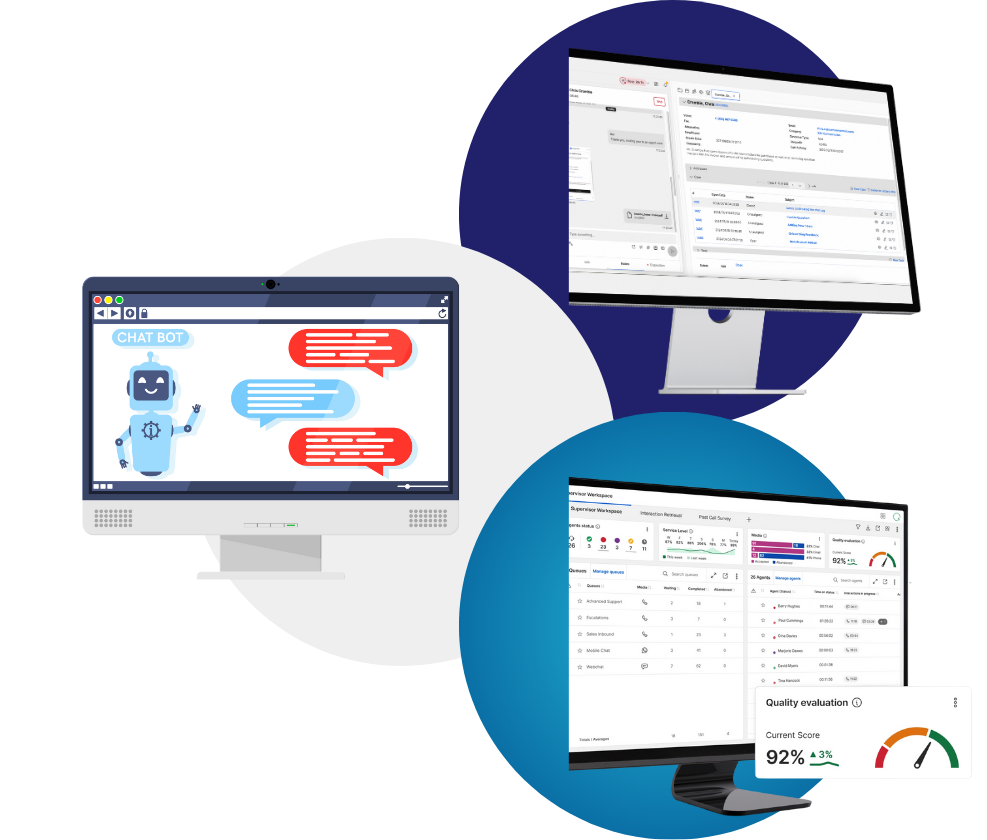
A cloud contact centre (CCaaS) is built for customer-facing teams. It lets businesses manage conversations across voice, email, chat, SMS, and social media, all from a single platform. It routes customer queries to the right people, integrates with CRMs, and gives team leaders powerful analytics and real-time insights.

You can also track the full customer journey, use AI-powered chatbots, and monitor agent performance in detail, making it a powerful tool for improving customer service levels and satisfaction.

Great for: Sales, support, and customer service teams handling high volumes of multi-channel interactions.

Do you have to choose just one? Not at all!

One of the best things about today’s cloud platforms is flexibility.

Many businesses use UCaaS for most staff, and add CCaaS (Contact Centre as a Service) for teams who need advanced customer engagement tools.

At Evoke Telecom, we work with market-leading providers:

8×8

8×8 delivers a unified, easy-to-use cloud platform that brings together contact centre, voice, video, chat, and Microsoft Teams integration, all enhanced by AI to boost performance and productivity. With flexible licensing, you can choose “Work” licences for everyday users and “Contact” licences for customer-facing roles, so you only pay for the features you actually need.
8x8 contact centre group icons

ipSCAPE

ipSCAPE adds powerful contact centre capabilities on top of existing systems like Wildix, without disrupting your current setup. It’s a comprehensive CCaaS solution, offering features like Dialler, Agent Scripting, Call Recording, Quality Assurance, and more — all included under one simple, all-in-one licence.

Using a mixed model approach is ideal when only a portion of your team needs the extra power that CCaaS provides.
COTU ipSCAPE integration graphic

How can CCaaS be a game-changer?

CCaaS platforms offer more than just better call handling, it is the foundation for smarter operations and stronger customer experiences. Some of the biggest wins include:

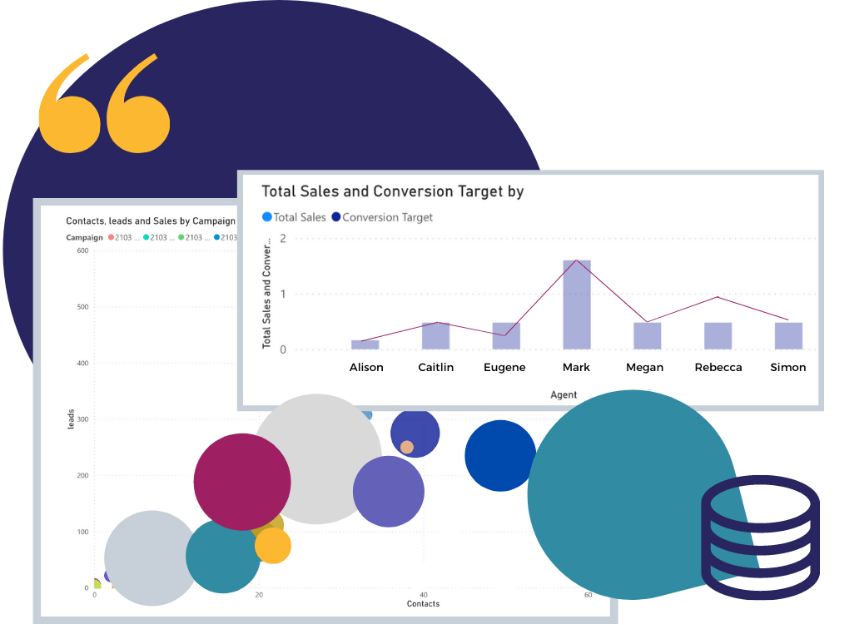
  • Advanced Reporting & Analytics: CCaaS helps elevate both your Management Information (MI), the real-time, day-to-day data used to monitor KPIs, and your Business Intelligence (BI), which uncovers trends and supports long-term strategy. With feature-rich built-in analytics tools, you gain deeper insights, better visibility, and more informed decision-making.
  • Agent Status Tracking: Understand exactly why agents are unavailable, whether they’re on lunch, writing up notes in the CRM, in training, or on a Teams call. This transparency helps with planning, productivity and having a better understanding of how your team uses its time.
  • Wallboards: Real-time dashboards display live metrics like call volumes and handling times, number of missed calls, and all data that gives supervisors and teams the visibility they need to stay on top of performance and to keep making informed decisions on how to improve.

As you can see, it’s not just about picking up the phone faster, it’s about optimising your people, processes, and data to deliver exceptional customer service. The bigger picture.

Which One’s Right for You?

While there’s general guidance on when to choose UCaaS or CCaaS, every business is different. It’s not just about what you need today, it’s also about where you’re headed, how your team will grow, and the kind of customer experience you want to deliver.

The good news? You don’t have to pick just one. Many organisations are blending UCaaS for everyday communication and CCaaS for customer-facing teams, and platforms like 8×8 and ipSCAPE are built to support that flexible approach.

At Evoke Telecom, we’re here to help you find the right mix. Whether you’re looking for simple cloud calling or a feature-rich contact centre solution, we’ll guide you through your options and match you with scalable, best-in-class tools.

We’re here to chat, get in touch today

ipscape and 8x8 logo

Continue reading

Free Hotel Management Software with your Wildix telephone system.

PMS or Property Management System software is key in the day to day running of todays Hotels and Guest Houses.

And, there are some truly fabulous PMS solutions available to the Hospitality Industry, including Guestline, Fidelio, TigerTMS and many more.

Invariably when Evoke Telecom install or upgrade telephone systems at hotels, we get asked the same question, “does it integrate with our PMS?”.

Well now, following progressive thinking from the amazing team at Wildix, the need to have or to even integrate your telephony into PMS has become less important.

This is because Wildix have included many of the features offered by todays Hotel Management Software into their webRTC telephony solution FREE OF CHARGE. 

Wildix HMS boasts many really useful features including:-

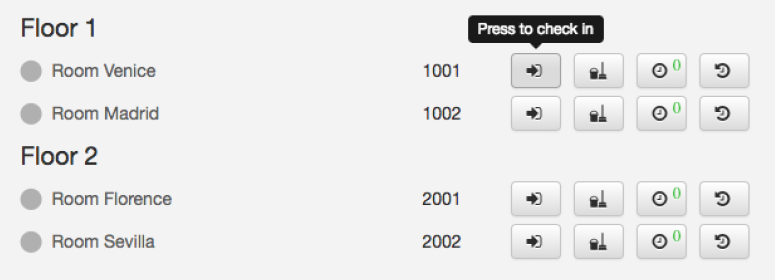
  • Check In / Check Out
  • Setting Wake Up calls

  • Service Make Up Room – clean or dirty status

  • Call Billing per room
  • Block outgoing calls from rooms
  • Reception announcement of emergency call made from rooms (meaning Reception can meet the attending emergency services and take them immediately to the incident location).


This will be an absolute winner for Hotels, Guesthouses and smaller Boutiques many of whom can neither afford a  PMS solution or do not wish to currently fully integrate PMS into their telephony platform. Many of the standard features that  the Hospitality Sector needs and love, come free of charge, out of the box (or in this case ‘out of the cloud’).

But hey, don’t worry if you actually DO WANT  to integrate your PMS software, because invariably Wildix WebRTC telephony offers that option as well.

If you would like to know more, then please contact our helpful team by email at hello@evoketelecom.com or smile while you freedial 0800 8403688.

Evoke Telecom Services – delivering value.

Hosted vs Premise Telephony? It’s like buying vs renting a house.

Much is being written currently about the impending demise of the PBX as market perception becomes one of a shift towards hosted or cloud telephony services. So, has the PBX really had its day or is it all just ‘smoke and mirrors’?

Some see the commercial comparison as a bit like buying versus renting your house. The upfront costs, furnished or unfurnished, fixtures and fittings, getting the landlord to make repairs and of course the value of your investment when you decide to move.

When it comes to the topic of hosted (or cloud) telephony, recently we have seen much press about ‘Skype for Business’, the new buzz phrase quickly replacing MS Lync conversations. Of course we have all been asked those typical questions around Lync: should I include Lync voice, what about RCC, how do I ensure QoS, what are the implications on my current connectivity, what servers do I need? Indeed some of these questions are pertinent be the conversation Lync based or wider around hosted voice solutions in general.

So, why would a customer wish to consider hosted / cloud telephony? There are of course already a wide variety of options available to choose from, with more entrants coming into the market it seems almost weekly. Taking a more generic view some of the more obvious attractions might include: perceived very small capex required to setup, feature rich functionality, location independence and flexibility, various connectivity options, attractive inclusive calling bundles, built in call reporting. In essence a pretty elegant offering at a cost predictive ‘per user per month’ pricing model.

Something not always anticipated by a customer when exploring the hosted solution are the upfront costs required to deploy. These can often be as much as a 4 or 5 figure investment and might include: handsets (although there are some FOC opportunities available for ‘extended / connected terms’), new connectivity, new routers, wiring and PoE, installation engineering, training and support.

Finally, hosted feature sets, albeit fulsome, sometimes fall short in some areas when compared to some premise based alternatives. Examples might include: conference calling, call recording (PCI/DSS/FSA compliance), managing mobile calls through the server, management information and application integration.

When comparing the TCO (Total Cost of Ownership) of a hosted solution versus a premise based the breakeven point still seems to typically calculate at between 30/36 months, beyond which the hosted solution will begin to have a negative impact on the operating costs line on the company balance sheet. However, at relatively low set up cost and extremely competitive monthly plans for many hosted is the way forward.

It’s a bit like buying vs renting property really.

Sounds almost too good to be true. And the fact of the matter is that hosted offers for many an attractive and rich proposition that exactly fits and best suits their business needs. However, as with all things in life, one solution does not necessarily work for every possible scenario. Or maybe it does!

We are starting to see conversation around and the emergence of solutions where customers will be able to integrate premise based solutions into cloud options, in a hybrid type of deployment. An interesting article on this can be found in CommsDealer following an insightful interview with Will Morey, Co Founder and Director of the UK exclusive Ericsson-LG distributor Pragma Unified Distribution –   http://commsbusiness.co.uk/features/clouds-hammers-nails-and-the-vitality-of-the-pbx-market/

Indeed in a recent blog on our won website, Mark Deakin, Partner Technology Strategist at Microsoft explores the merits of hybrid thinking when making that cloud versus premise consideration – https://evoketelecom.com/blog/have-you-still-got-your-head-in-the-clouds/

So, will it be that in the coming weeks and months we see yet another marketing metashift from hosted to hybrid? Time will tell.

If you would like to know more about premise, hosted or connectivity solutions feel free to contact the Evoke Telecom sales team for free on 0800 840 3688 or mail us on sales@evoketelecom.local where we will be more than pleased to offer our help and support.